Best Survival Knife for the beginner
- A fixed blade is better for a beginner. Why? Because it is stronger and less likely to break than a folding knife.
- The length of the blade should be 4-5 inches. Why? So that the knife is not too small to be useful, but not too large to be unwieldy.
- A full-length tang ensures that the knife is strong enough to last for a long time.
A thin blade edge is my preference for a survival knife
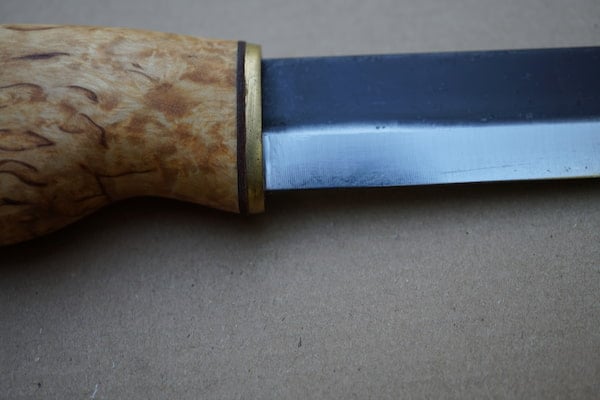
I prefer the cutting edge of the blade, called the relief, to be thin as reasonable for easier carving and bushcraft techniques. As an example a thinner blade makes it easier to notch a fireboard for the bow drill.
Avoid a thick carving edge meant for chopping, such as you would find with an axe.
Thick edged knives
Most unbreakable survival knives have a thick edge. The thicker edge is to prevent chipping of the edge through repeated use: for example, cutting or chopping hard, dried wood.
Medium thick-edged blade
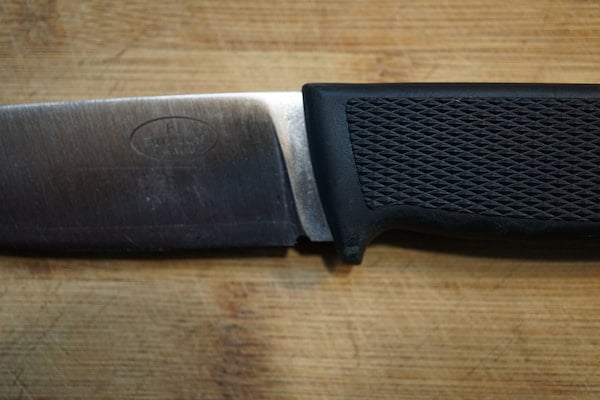
Pictured below are two examples of medium thick-edged blades I own, the Fallkniven F1 and SOGS Northwest Ranger. Though the F1 carving edge is thicker than the SOGS Northwest Ranger the F1 still meets my requirements for a superior survival knife.
Knife Handles for comfort
The handle should fit comfortably in the hand and balance well. We're not looking for a Machete or a Bowie here, but rather a strong carving knife with a solid grip. The comfort of the knife handle is a key to consider for beginners.
After a brief time of carving, uncomfortable knife handles make your hand sore and blister.
My short list of Survival Knives I recommend
The F1 Fallkniven. There are many excellent survival knives produced in the USA. And there are knife companies I have listed below that you should check out. The F1 Fallkniven cost is on the higher end for a simple bush knife.
A recent alternative to the F1, is the Terrasaur survival knife. Continue to scroll down the page for photos and carving test's I've done using this knife.
Utility and survival knives
For general use and a functional utility survival knife for everyday carry, I like the Järvenpää Classic Puka. I use this knife frequently for a variety of bushcraft applications, including the hand-carved netting needles in the photo.
If all I had was my Puka (Puukka) with me during a full survival exercise, no worries. This handy Puka knife would get me through just fine.
Your skill in the use of a knife. Trumps any knife.
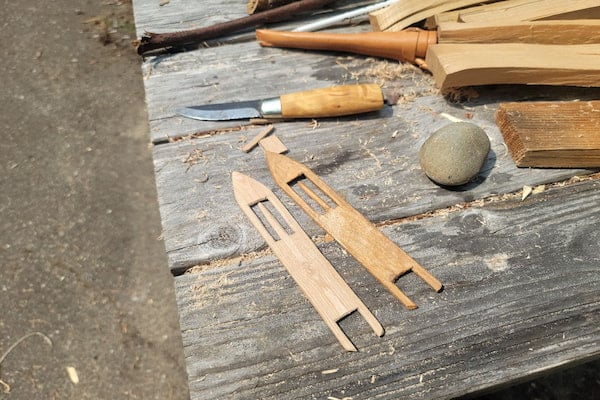
The Fallkniven F1, SOG Ranger, and the Finnish Puukka are all useful knives. For carving, I often use all three. I have other knives of course, but these are the blades I most often use.

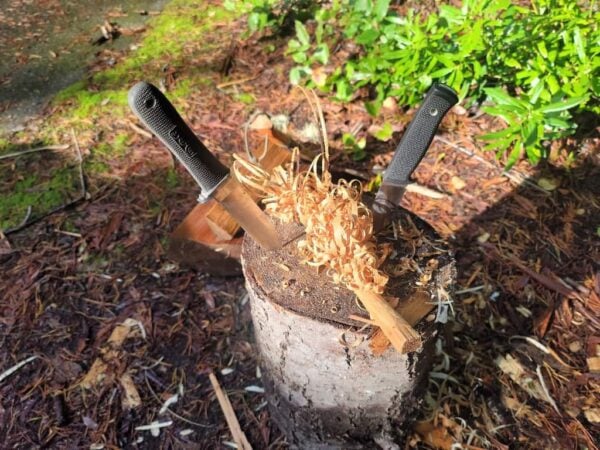

Mora carving knives
You do not need to spend a lot of money on a carving knife for practicing survival skills. Down the road, when you have some carving time behind you, you will have a clearer idea of the type of knife that fits you best - as well as the type of work you use it for.
Mora sells affordable knives for day-to-day carving. I recommend these knives especially if you haven't carved for a while. A note on Mora's companion series of knives: many of Mora's knives do not have a full tang. But they are excellent lightweight carvers. These knives are recommended for most of our camps.
If you want to learn more about the knife steel Mora uses for their knives. Read their article "The Steel That Makes the Knife."

Mora's Companion Series
Mora knives, including their Bushcraft series, are lightweight so be careful how you treat your Mora blade. The edge will chip if used on dense, dry wood. Also do not pry with these lightweight knives. These are great knives for carving but not for rough treatment.
We have been issuing these Mora's for our Teen camp since about 2006. The edges of the blades have chipped but with a bit of sharpening the edges come back quickly.
Knives and manufacturers
All major knife manufacturers make knives for survival and bushcraft. So, take a look at the manufacturers I have listed here. I also recommend visiting several knife stores in your area and checking the knives they carry. Listen to what the dealers have to say, but at all costs, stay away from hollow-handled knives.
Many of these long-winded knives have a survival kit stashed in the handle. Some even come with a compass at the end. This is a worthwhile idea but unless the quality is high stay away.
Kill me a Bar
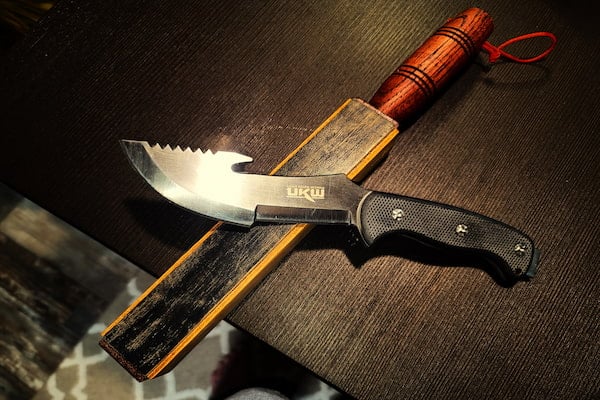
A couple of students showed up with knives that looked like Rambo's at camp. They looked like they were ready to take on a Grizz instead of carving wood. They soon learned about these types of knives.
After one minute of carving with these monsters, their hands were sore. Not far behind, blisters were on the horizon. These knives are weak and cheesy. If that's all you got. More power to you.
Heavy knives
There are times when a heavy knife is appreciated when there is a lot of chopping required like when making your way through thick jungle.
Condor Tool & Knife
This is a new knife company for me. They have some exciting knives. After reading about the Parang knife used by the people of Malaysia, I had to have one. I didn't want a 3ft machete so I chose the Village Parang SS, designed by Joe Flowers.
The Village Parang
The Village Parang, is 12" in length, and is a very serious heavy knife.
The walnut handle is a top-notch finish. For heavy chopping, this heavy knife weighs in at around 2 lbs. I've had some time to take this knife to task harvesting small dead spruce poles: cutting, limbing, and peeling the bark.
This knife does the job but I find it unwieldy due to its size and weight balance. But I will say as with any knife the more you use it the more comfortable with it you become.

Condor's Terrasaur Knife
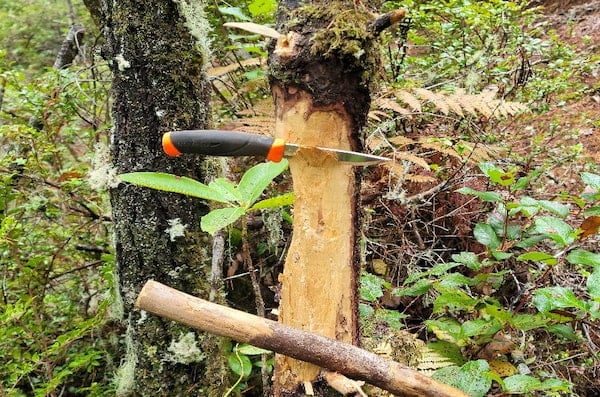
I recently purchased the Terrasaur with the orange handle from Ragweed Forge online. It was a few bucks cheaper than Condor's Knife and Tools price. I received the Terrasaur just before Christmas 2023 and demonstrated it at the last Fire Craft class I taught in Oregon.

This knife is solid with a" high impact polypropylene handle" with lanyard, the blade is made with “1095 High Carbon Steel”, and a Scandi style grind for ease in sharpening.
The Terrasaur has a full-length tang with the tang protruding from the end of the handle. The metal pommel is common with Air Force-style survival knives for use in breaking glass during emergency exits.
This is a good bush knife that will do what it's designed for and is sturdy and comfortable in overall size and quality but won't break the bank.
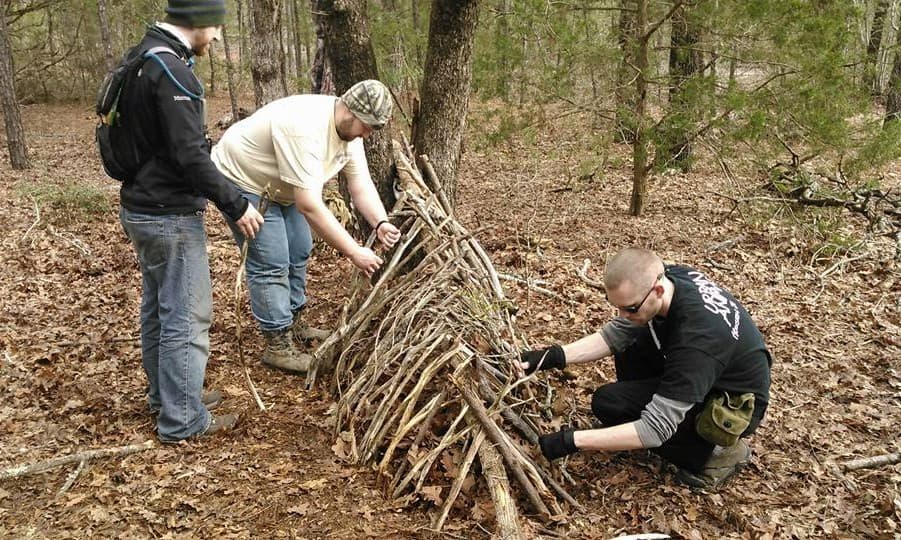
Join us for Winter Camp and try out your bush knife!
Terrasaur Performance
I now have over eight hours of carving time with Terrasaur besides using it to start a fire in the wood stove. Testing included carving a quicky camp spatula from Cottonwood shown in photo, and a netting needle and gauge.