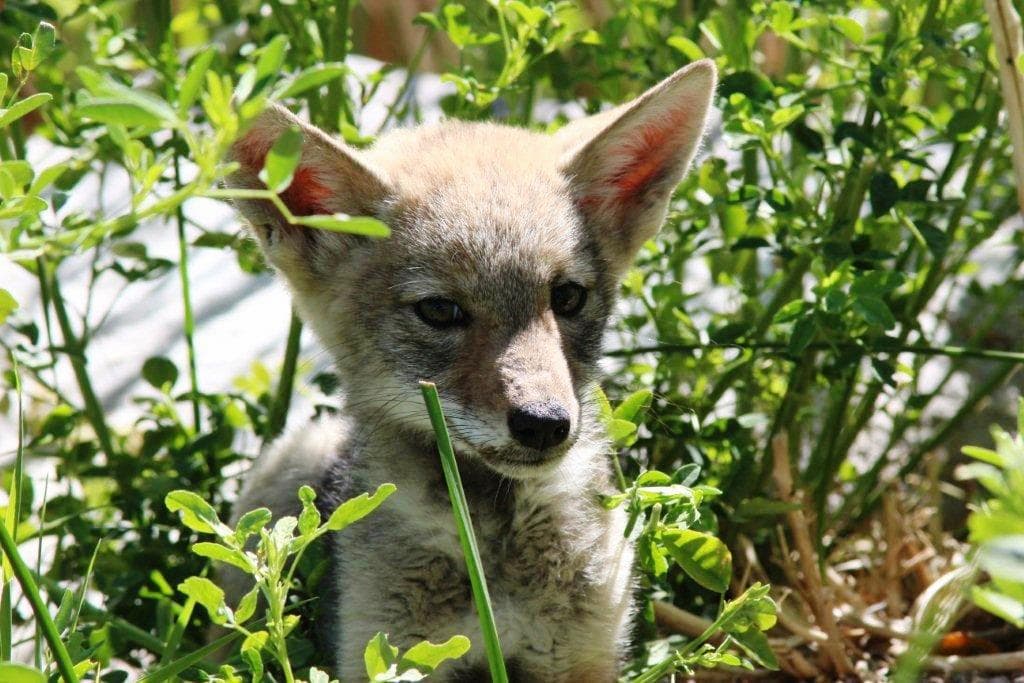
The mountain lion, Felis concolor, or cat of one color, is also known as cougar, panther, ghost cat, catamount, and puma. The mountain lion is the largest feline carnivore in North America. Adults are tawny to chocolate-brown with black tips on their ears and their long tails.
Mountain Lion Facts
On average, females measure 7 feet from nose to tail and weigh between 70 and 100 pounds. Males may reach up to 8 feet in length and weigh between 130 and 150 pounds. The largest recorded mountain lion weighed in at 276 lbs.
Mountain Lions in Urban Environments
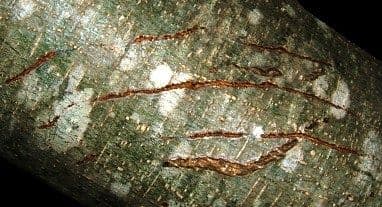
One of the quickest ways to suspect the presence of mountain lions is to be aware of the cat's preferred prey, their sign, and tracks.
In urban areas along the coast of Oregon the Columbian Blacktail Deer are plentiful so it is likely mountain lions are not far away.
Dogs and Cats are easy Mountain Lion Prey
Cougars will feed on easy prey like house cats and dogs. A spike in pet disappearance might predict a mountain lion in the neighborhood. The risk to domestic pets is greater if fed or left outside at night. Cougars will eat pet food left outside and animals that are chained outdoors for the night.
Video of a Mountain Lion 2020
You can feel the excitement we felt watching our first video of a mountain lion, aka Puma concolor, walking at night near our home in 2020.
How many toes does a Mountain lion have?
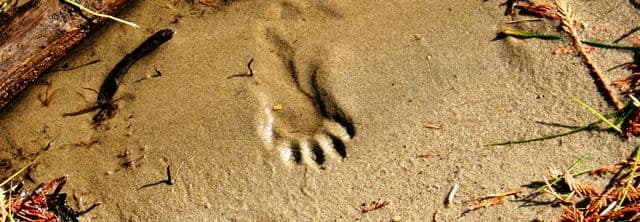
Mountain lions like the canine (Dog) family have four toes on each foot. And like dogs, the big cat has a fifth toe higher up on each leg.
This fifth toe is called a Dewclaw. This digit or toe is non-weight bearing and will usually only show in substrates such as soft snow or mud.
Track Description
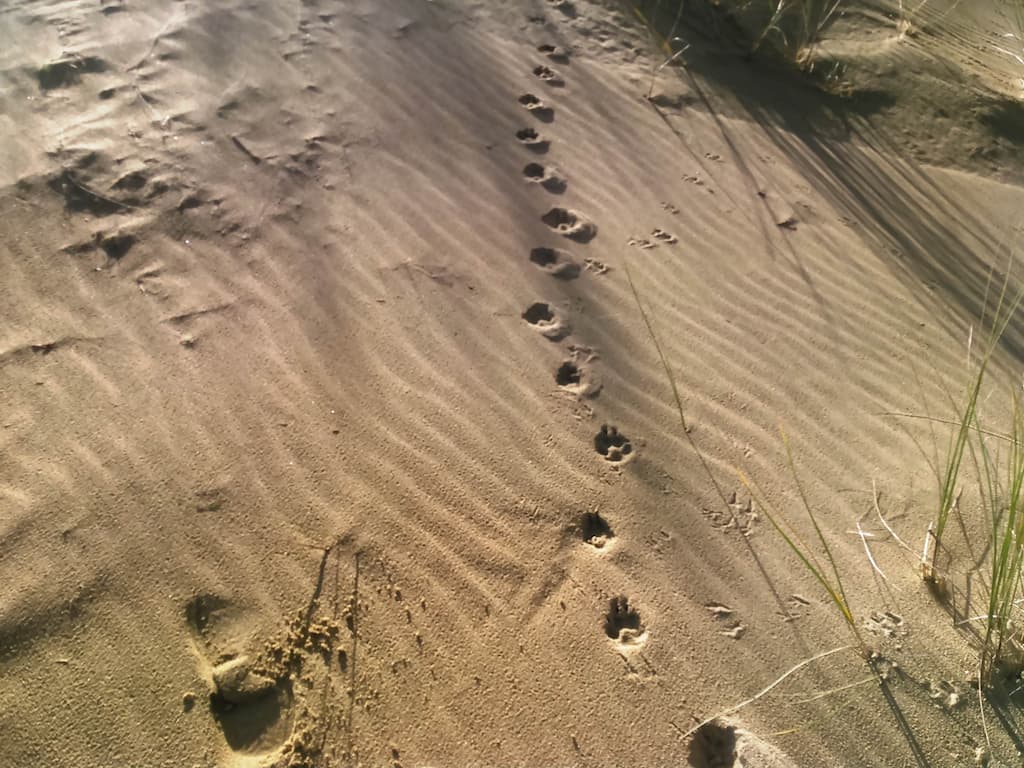
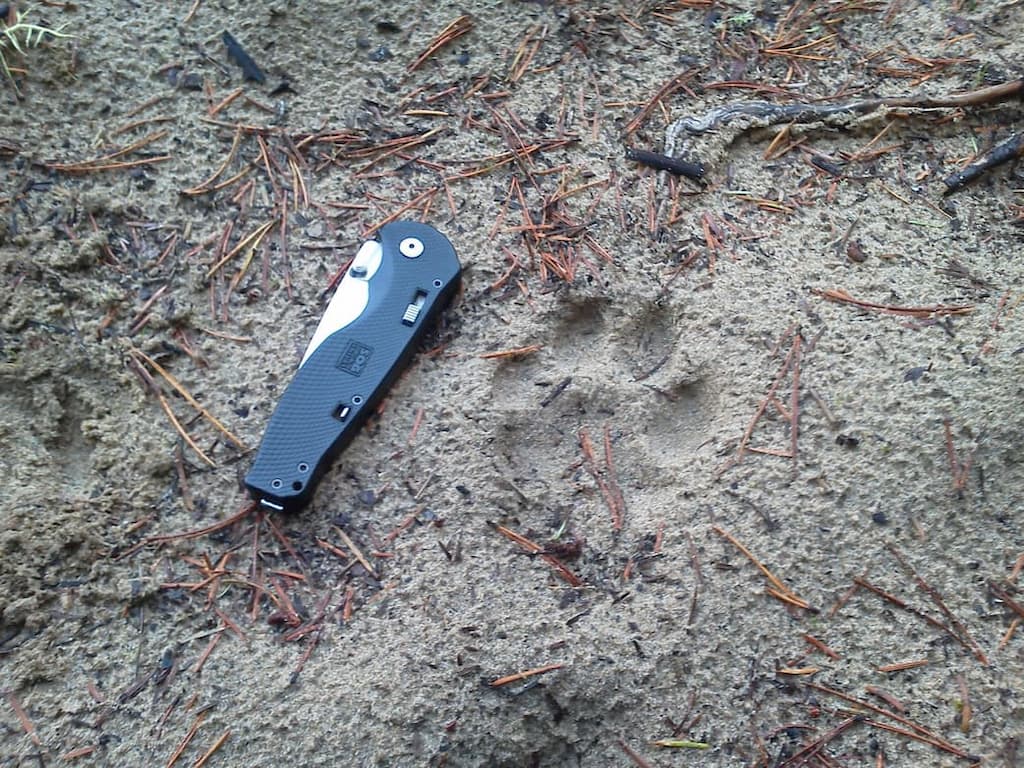
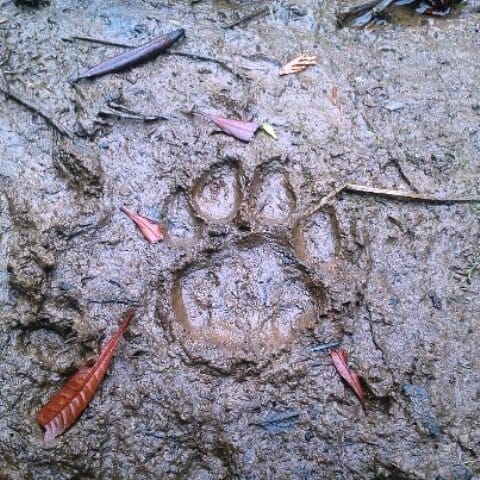
Front tracks measure - 3"1/16 to 4” L. by 2 ¾” to 4”5/16 W. Cat tracks will look almost round and rarely show claws. Hind tracks measure – 2"15/16 to 4"1/8 L. by 2"9/16 to 4"3/4 W.
How to measure the footprint of a Cougar or Dog
- To measure any track, begin by measuring its width at the widest point.
- Then, for the overall length, measure starting from the heel, measure out to the longest point of the animal's claws.
- If the track has no claws showing then measure starting from the end of the heel pad and measure out to the longest digit of the toe.
- Then assuming the track has no claws showing then measure starting from the end of the heel pad, and measure out to the longest digit of the toe.
Use these measurements to decide if the tracks fall within the average measurements noted above. If it does, check again to see if any claw marks are visible, make sure to measure the track length including claws if they are showing.
How to tell the difference between Cougar and Dog tracks

Cats have retractable claws Dogs don't
Dogs do not have retractable claws or nails as cats do. Large dog tracks are often mistaken for cougar tracks because of their size. Unlike dogs cougar tracks rarely show their claw marks in tracks
This is a good cue for the searcher. Cats show their claws in tracks only about 10% of the time, whereas dogs show their nails 100% of the time.
The track photo on the top of the page is a great example of the roundness of a feline print.
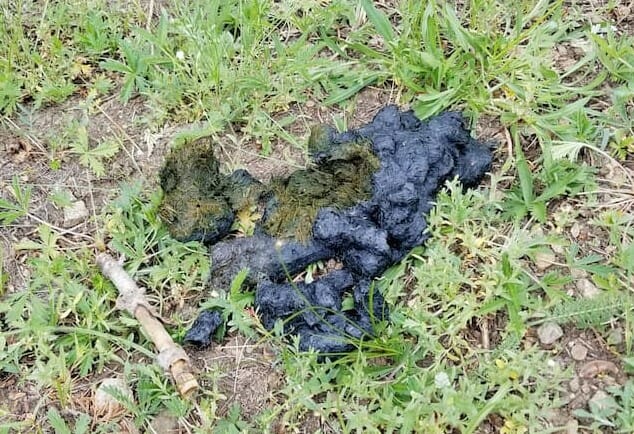
How to identify Mountain Lion Scat

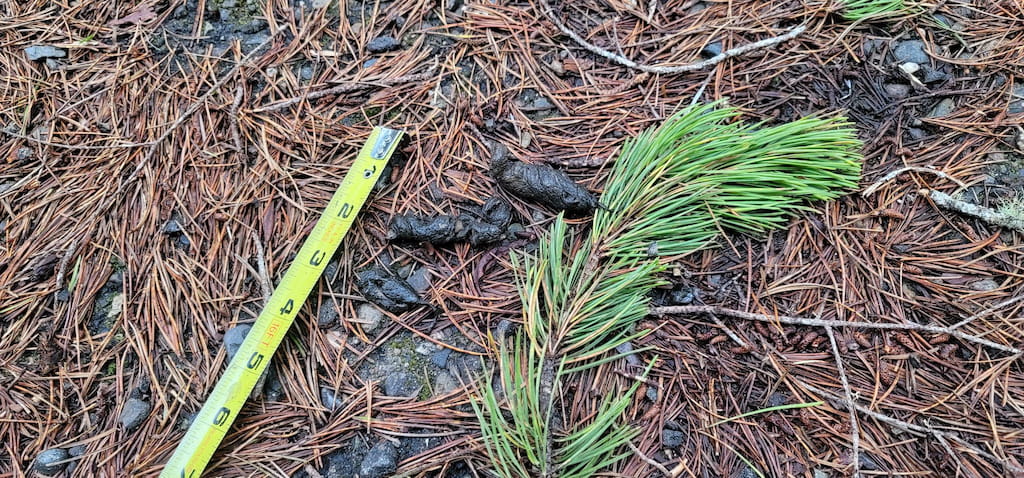
Mountain Lion scat is: ¾” to 1” average in diameter. The scat is tubular and segmented in shape with at least 1-blunt end. Scat often contains deer hair, bones, and grass varying in size and shape.
Non-Typical Scat or Poop
An example of a non-typical scat, cougars when gorging on fresh prey, will leave a pile of scat that is non-typical and no longer distinctly segmented. Instead, it leaves a large pile of soft poo with no recognizable tubular shape.
And Mountain Lions, in my experience, rarely cover their scat or poo.
Interpreting Cougar Scat Video
See the video Interpreting Cougar Scat.
Other types of Cougar Sign

Scent Scrapes
Cougars and mountain lions scrape together piles of debris, which may include mosses and leaves as in the photo example. Scent scrapes can measure up to 1 ft. in diameter.
Cougars communicate their territories by scraping debris into a pile using their paws and then urinating on the scrape. These scent scrapes are territorial intersections where other cougar areas overlap.
To confirm the cougar scent scrape yourself, bend down, and give the pile a quick whiff. If it has a strong cat-like scent, it's a cougar scrape.
Cougar Reproduction
Mating Season: from December to March but can happen at any time during the year. Gestation: 82-96 days. Litter size: 2-4 kittens.
Mountain lions can:
- Bound 30 to 40 feet running
- Leap 15 feet up a tree
- Climb over a 12-foot fence
- Travel many miles at 10 mph
- Reach speeds of 50 mph in a sprint
- Takedown adult elk
Mating
Mating Season: from December to March but can happen at any time during the year. Gestation: 82-96 days. Litter size: 2-4 kittens.
How often do Cougars feed?
Lions kill 1-2 deer a week hiding and guarding carcasses while feeding on them for several days.
Caution: if you discover a deer or elk covered or partly covered in debris. Leave the area immediately and report the site to SAR Command. Mountain lions will protect their kills and may be aggressive. One lion can consume up to 20 or 30 pounds of meat in a single meal.

The Mountain Lion diet consists of:
- Elk
- deer
- bighorn sheep
- mountain goats
- moose
- beaver
- coyotes
- porcupines
- raccoons
- mice
- ground squirrels
- rabbits
- skunks
- birds
- cats
- dogs
Tip: Mountain lions will prey on other lions if no other animals are available.
Protect your pets
Dogs and cats left outside overnight when chained with an active lion in the area are easy prey. Don’t feed pets outside or leave pet food feeding bowls out. Pets left outside at night may draw in hungry cougars.
The odds are better you will be struck by lightning than attacked by a Mountain lion.

- Range - Mountain Lions may cover 25 to 785 square miles.
- Lifespan - Mountain Lions live an average of 8-10 years in the wild and can live up to 20 years in captivity.
- Lifestyle - Mountain lions live solitary lives. A mother mountain lion and its kittens live together until the kitten is old enough to survive on its own.
- Breeding Habits – Female mountain lions breed for the first time between one and a half and three years of age.
- Lion kittens lifespan - 1 in 6 survive dominant males that kill juveniles within their territories.
- In California, Fish and Game laws protect the big cats from hunters.
- 75% of kittens do not live to be two years old.
Bounty Hunting of Mountain Lions
Bounty hunting of Mountain Lions began as early as the 1600s in North America. Early settlers feared predators believing they hurt game populations. By the 1900s, predators were killed in astonishing numbers. The killing of so many predators had a disastrous effect. The loss of wolves and cougars led to an overpopulation of deer and other herbivores resulting in overgrazing, increased erosion, and a decline in the long-term health of ecosystems.
Human and Cougar Conflict
A scientific review of attacks by mountain lions in the United States and Canada starting from 1890 through 1990. Indicated there were 53 mountain lion attacks on humans during this period. Nine attacks resulted in 10 human deaths and 44 non-fatal attacks. At least 10 attacks since 2000 in the U.S. resulted in death from lion attacks.
- Oregon has remained attack-free for more than 100 years. This number could change based on a suspected cougar attack in Oregon.
If you meet an aggressive Mountain Lion -
- Always maintain eye contact, and never turn away from the lion.
- Stand up straight, with arms above your head to appear larger.
- Back away very slowly for when the lion is guarding a kill or den.
- Throw rocks or sticks and yell at the animal if it approaches.
- Fight back If the cougar does attack.
- If you play dead with a Mountain Lion, you will be.
*Remember above all. DO NOT RUN! No cat can resist the instinct to give chase.

Hiking and camping in mountain lion habitat
- Do not hike alone
- Go in groups of adults supervising children
- Avoid dawn and dusk excursions.
- Keep children close to you as they are especially drawn to children.
- Pick up, small children. This predator sees small children as easier prey.
- Do not approach a lion. Most mountain lions will try to avoid confrontation, so give them a way to escape.
- Do not run from a lion. Running may stimulate a mountain lion's instinct to chase.
- Do not crouch down or bend over. A human standing does not resemble a mountain lion's natural prey.
- Do carry Bear Spray.
Defending against an aggressive Lion
- Do all you can to appear larger. Raise your arms. Open your jacket if you are wearing one. Wave your arms slowly and speak firmly in a loud voice.
- Fight back if attacked. Mountain lions usually try to bite the head or neck area; try to stay standing and face the attacking animal.
- The eyes of cougars are especially sensitive. Use any sharp object, pen, or stick, to jab into the eye socket.
Bear pepper spray is a recommended deterrent for use against an aggressive and attacking lion.
Bear pepper spray must contain 1.3%-2% capsaicin and related capsaicinoids. The suggested spray distance is at least 25 feet in a cloud pattern lasting 6 seconds or more. Reference; USFS Cibola National Forest Website. US Fish and Wildlife PDF Bear Spray vs Bullets Bear Pepper Spray
Colorado 2019 & 2026 Cougar attack
Colorado Parks & Wildlife February 2019. The hiker fends off the cougar attack by choking.
Colorado Parks & Wildlife January 01, 2026. Witnesses observed a mountain lion standing over the victim.
Washington State
Washington State Fish and Game Fact Sheet on Cougars Fatal Washington Cougar Attack 2018. Two mountain bikers attacked.
Oregon State
Oregon Department of Fish & Wildlife. The States first fatal Cougar attack, 2018.
NPR Network. Women cyclist attacked by young Cougar, 2024
Injured Cougar Dispatched January 2026
Recent Mountain Lion Sightings Coos County Oregon
- 3/05/ 2019 evidence of cougar kill William Tugman State Park. North trail.
- 5/12/2014 evidence of a cougar Tuesday down Mobilane Road, a gravel street near Charleston OR. Kinyoun said that cougar sightings could end up being anything from dogs and raccoons to a bobcat.
- North Bend for the second straight day, reports of a mountain lion sighting were on the North Bend Police logs for Tuesday, Sept. 8, 9:27 a.m., Chinook/Roosevelt, “Mountain lion sighting, occurred 9-7-15 @ approximately noon.”
- A woman reported Monday her husband had seen a cougar walking along the tree line at North Bend Medical Center in Coos Bay. Coos Bay Capt. Cal Mitts said officers who went to the center, 1900 Woodland Drive, were unable to find any tracks.
- “We have not had one in that area that has proven to be a cougar, but we have had sightings," Mitts said, referring to three or four reports in the last couple of years.”
- Cougar Warning, Aug. 27 Police in Florence have warned residents to be on the lookout for wandering cougars. There have been several sightings reported in the Munsel Lake Road area, around Coastal Highlands and Kingwood Street.
Verified Mountain Lion Attacks in California
Verified Mountain Lion attacks humans in California (1986 through 2014). The CDFW (California Department of Fish and Wildlife) defines a mountain lion attack as an incident resulting in direct physical contact between a human and a mountain lion resulting in bodily injury or death to the person.
CDFW considers a mountain lion attack to be verified only when a physician, law enforcement officer, or CDFW personnel finds a mountain lion that caused the injuries.
Guidelines for Living In and Visiting Mountain Lion Habitat by the USFS.
Recommended Reading The Beast in the Garden. Warning from Mark if you read Baron’s book you may never go outside again. The Cougar: Beautiful, Wild and Dangerous by Paula Wild. And Cat Attacks and True Stories and Hard Lessons from Cougar Country by Dean Miller.
-
- Read about Oregon's Toxic Amphibian - Wing of bat, eye of newt….
- CWD also known as Chronic Wasting Disease. Read how Colorado's big cats are helping infected Mule Deer.
- More on CWD. Predators Fang
- Tips on Ticks
- Living the Wilderness Way
- Learn How to Track Animals
- Wasps Hornets, Oh My!
Have a Mountain Lion sighting or story? See the comments section below.
Sources: Mark J Wienert - Lifesong Wilderness Adventures. Busch, Robert H. The Cougar Almanac: A Complete Natural History of the Mountain Lion. New York: Lyons and Burford, 1996. Whitaker, John O. 1996. National Audubon Society Field Guide to North American Mammals. Alfred A Knopf, Inc. p937. Wildlife of the Pacific Northwest by David Moskowitz. MOUNTAIN LION FACT SHEET By T. R. Mader, Research Director. Mountain lion facts USFS Defenders of Wildlife Mountain Lion Fact Sheet. Extreme Science, Mail Tribune, The World. Oregon Department of Fish and Wildlife.