LIfesong Wilderness Adventures

Wilderness Survival Training for Adults in Oregon

  • Survival Skills Training
    • First Circle Camp – Wilderness Survival Training
    • Winter Outdoor Survival Training
  • Oregon Survival School
    • Survival Skills Weekend
  • Custom Survival Training
  • Contact Us
    • Registration Policies
    • FAQ
    • Getting to Camp
  • About
    • More Services – Gear, Rentals, etc.
      • Business Information
      • Privacy Policy
      • Recommended Links
  • Calendar
    • Media & Press
  • BLOG
    • The Philosophy
    • Outdoor Survival School
    • Plants
    • Survival Gear
    • Tracking
    • Teen Adventure Camps

Aug 20 2022

The Amazing Blue Elderberry

I'm a pushover for the blue elderberry shrub, Sambucus cerulea, and S. racemose. From August to late September, we are out foraging for the ripe, blue, berries of this amazing shrub. We make a tangy syrup from its ripe berries for health benefits and a sweet syrup to pour over pancakes and ice cream. And for the knowledgeable forager, a bounty of survival tools awaits to be harvested including spindles, bows, blowguns, traps, and musical instruments. All of these are from the branches of this amazing and versatile native shrub.

Amazing blue elderberry shrub in bloom.

The Blue Elderberry

Blue Elderberries grow in riparian habitats, road banks, meadows, and damp forest openings up to timberline. Berries ripen from mid-August to mid-September in most regions of the US. However, the berries ripen depending on local weather, elevation, and other regional factors.

Our native elderberry family

Sambucus cerulea and S. racemosa, are subspecies of the wild native shrub, ranging from British Columbia south to California. Sambuscus mexicana ranges from Northern California south into Mexico and east into Nevada and Southwestern New Mexico. The S. callicarpa species (Pacific Red Elder) grows in coastal habitats from Southern Alaska to Central California.

Cook the berries before eating

Warning! Elderberry is not a trail snack unless the berries have been cooked.

Blue Elderberry and more so, the Red elderberry, contain the compound hydrocyanic acid. This chemical compound may lead to mild Cyanide poisoning if consumed in large quantities. Cooking the fruit first renders the hydrocyanic acid harmless.

The bark, leaves, and roots contain the highest concentrations of this acid. But do not eat the berries raw as they can cause mild nausea. The fruit must be boiled and cooked well before consumption.

Does cooking and drying the berries remove toxins?

Yes, cooking removes toxicity from the elderberries. Cook before consuming berries!

Drying may not remove all the Cyanide toxicity in the seeds. So, simmer berries for 40 minutes to make sure. Cooking is the best way to remove any threat of toxicity.

It is best not to consume Elderberries if pregnant.

Are Elderberries safe to eat?

Cooking Elderberries makes them safe to eat. Now, after all the warnings about eating the berries raw, you may be a bit turned off. I understand.

"I have been eating blue elderberry syrup for over 30 years. And yes, the berries are safe to eat when cooked. Also, a small glass of elder wine made from fermented Elderberry juice is known to soothe my throat now and again."   ~Mark J Wienert

Immune Boosting and Medicinal Elderberry Syrup

Blue Elderberry Syrup is Medicinal as an immune booster. You can use the syrup recipe below for medicine. We use less sugar for the medicine batch than the recipe calls for making it come out a bit tarter.

Influenza A & B Virus Infection

Studies suggest Blue Elderberry extract taken orally shortens the duration of influenza. However, larger long-term studies are needed to understand the benefit of Elderberry in the treatment of influenza and other emerging novel virus strains.

Some species of Elderberry could also help relieve flu symptoms.

Is the Elderflower edible?

The good news is the flower clusters are nontoxic, edible and medicinal. The flower of Elderberry is okay to eat, and you will find recipes promoting fried beer batter. I did try one  years ago with the beautiful cream-colored elderflowers.

For my part, I found the result disappointing at best. I prefer my flowers to turn into berries that I can make into syrup. However, there are other uses for the flowers as a sugary Cordial made with flowers.

Elderberry Cream Pie.

Blue Elderberry Edible Cream Pie. Home made from delicious Elderberry Syrup.

How to Make Basic Elderberry Syrup

The syrup is a beautiful rich purple color and incredibly delicious on homemade pancakes, vanilla ice cream, or made into wild elderberry cream pie! Because Elderberry has a low pH we freeze the syrup until needed.

Syrup recipe

  • 1-quart ripe or frozen Blue Elderberries
  • Juice of one lemon
  • 3 cups water
  • 1 - 2 tbsp Cornstarch or flour. If the syrup is thin, add another tbsp of Cornstarch or flour, and Honey. Or continue to reduce the liquid by simmering.
  • 1/4 cup sugar or 1 cup honey

Crush Elderberries, add 1 cup of water and 1/4 cup of sugar. Or 1 cup of honey, to make the syrup thicker, and simmer for 15 minutes. Strain, and then add 2 cups of water to the seeds and pulp and strain again.

Add to the liquid the lemon juice and adjust the sugar if desired.

Bring to a boil and thicken slightly by stirring one tablespoon of cornstarch or flour in one tablespoon of cold water. Then stir this into the simmering syrup.

Makes 5 cups of syrup.

According to the author, Charlotte Bringle Clarke, "This syrup has few equals when used over pancakes or ice cream." I must agree with Charlotte.

Elderberry Cream Pie

The real reason I wrote this post is to share the delicate texture, the sumptuous pie filling that melts in the mouth, and the sweet-tart taste; just thinking about it makes my mouth water.

Harvest the ripe Blue Elderberries in the Fall

We harvest the ripe berries each Fall with great anticipation and delight. But after picking the ripe berries, we cook and reduce the berry liquid in preparation for making Elderberry Syrup. The syrup is the main ingredient before making the elderberry cream pie itself.

Elderberry Cream Pie Recipe Ingredients

NOTE: the recipe calls for a pre-baked pie crust. This is the only baking in this recipe. The filling is refrigerated firm in the pre-baked pie pan.

3-eggs, separated

2 Tbsp. grated orange or lemon peel

3/4 cup elderberry syrup

1-envelope unflavored gelatin

1/3 cup of sugar

pinch of salt

1/4 tsp cream of tartar

1/4 cup sugar

1-cup heavy cream

Bake in 9” pie shell

Blend until smooth the following ingredients:

Blend over heat until smooth: the egg yolks, Elderberry Syrup, unflavored gelatin, 1/3 cup sugar, and salt.

Do not boil. Add grated orange or lemon peel and pour into a bowl; refrigerate until slightly firm.

Do not refrigerate too long (like overnight), just long enough until slightly firm. The firming of the filling does not take long.

Beat the Egg and Cream

Beat the egg whites until stiff add cream of tartar and 1/4 cup sugar, beating continuously.

Beat heavy cream until fluffy and fold half into the egg-white mixture.

Fold the Egg-white mixture

Fold the egg-white mixture into the refrigerated sauce.

Pour into pre-baked pie shell and garnish with remaining whipped cream.

Serves 6

The Amazing Blue Elderberry, Thank you, Charlotte Clarke, for the delicious recipes!

Historical uses of the Blue Elderberry

I began learning about this shrub when I lived in the mountains of the Sierra Nevada. I discovered the local Miwok community used Blue Elderberry extensively for thousands of years. This useful shrub is of foremost importance to the Miwok culture.

Elderberry Blowgun

One of the cool things about Elderberry wood is its soft center pith. It can be scraped and removed to make a hollow stem. Straight shafts of a branch are split in half to remove the inside Pith. Finally, the two pieces are glued together and then wrapped with a cord for a serviceable Blow Gun.

Shorter straight sections of the wood are split part way and hollowed out for a Clapper Stick, a musical instrument enjoyed by the Miwok people.

Green Elderberry Bark

If you are using the Elderberry stalks green, you will want to carve off, strip, scrape, remove all the green bark, and let the wood dry some. A spindle from the Elderberry is excellent for the bow drill or hand drill friction fire-making process.

Elderberry Hand Drill Spindle

If you are a fan of the Man vs. Wild or Born Survivor series with Bear Grylls, Bear made a Hand Drill fire in the Sierra episode using a long slender spindle from the wild Blue Elderberry. An Elderberry spindle is an excellent choice for success for a bow drill or hand drill fire.

Leave Berries for Wildlife!

Elderberries are food for, Western blackbird, House Finch, Red-Shafted Flicker, Ash-Throated Flycatcher, Black Headed Grosbeak, Scrub and Steller Jays, Ruby-crowned Kinglet, Bullock’s, and Hooded Oriole, and Phainopepla.  Don't forget the Bears! Leave berries for the bears too.

In Conclusion

Remember; positively identify any plant before use, edible, medicinal, or utilitarian application.

USDA Department of Agriculture - blue elder information

Miwuk Medicine use of Sambucus nigra

Recommended reading:
“Edible and Useful Plants of California” by Charlotte Bringle Clarke (Great wild food recipes include the elderberry pie and syrup I am sharing here.)

“Edible and medicinal Plants of the West” By Gregory L. Tifford

Check out this great recipe for Elderberry Barbecue Sauce by Mariah Gladstone

More Helpful Reading

  • How to harvest Elderberries
  • Useful plants of the Oregon Coast
  • Survival Skills Training
  • Wasps Hornets Yellow Jackets
  • Lemon Balm a Gentle Tea for Stress
  • Survival Knowledge-Trees for Survival

Written by Mark J. · Categorized: Plants

Aug 10 2022

Foraging Edible Mushrooms

Foraging Edible Mushrooms

Foraging for edible mushrooms in the forests of the Oregon coast led us to this striking King Bolete. Known as the King, Boletes edulis is prized by mushroom enthusiasts everywhere fungi grow. A hugely popular mushroom in the Pacific Northwest also called Porcine or Cep and is gathered from late summer into fall.

Foraging Edible Mushrooms

Edible mushrooms are plentiful in the fields and forests of the coast. This abundance of fungi occurs because of the Pacific oceans moderating influence. Moist air, rain, and warm temperatures create the perfect environment for fungi.

Foraging for mushrooms is a passion for us. We harvest year-round with late summer through December providing the most abundance. We primarily use mushrooms to supplement our food supply but also collect and dry them for medicine and bushcraft application.

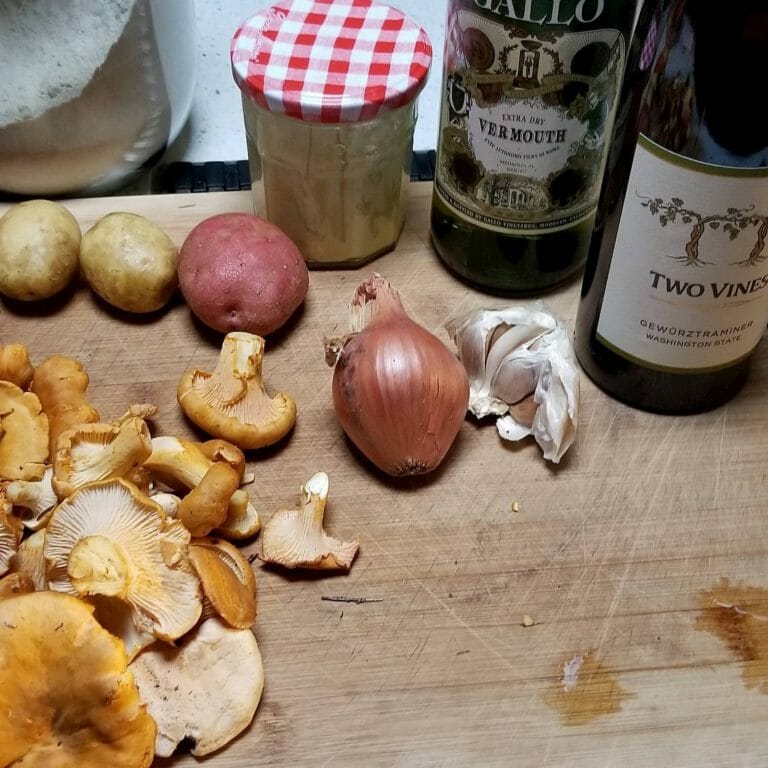
 Recipe for Chanterelle mushroom chowder
Ingredients we use for a delicious edible Chanterelle mushroom chowder.

Harvesting Mushrooms on Public Lands

The USFS and BLM lands are good areas to begin discovering and forage for mushrooms. For our area, the Siuslaw National Forest is close with good areas to mushroom. No harvest permit is required on the Siuslaw for personal use. However, there are limits to how much you can harvest.

What the rain brings

A Polypore shelf mushroom the Red Belted Conk found growing on a Douglas Fir tree.
A polypore shelf mushroom, the Red Belted Conk found, growing on a Douglas Fir tree.

Mushrooms come in a dizzying array of shapes, sizes, and colors. In fact, some mushrooms such as the woody Polypore's, are too tough to eat. But have uses for health and outdoor survival application. Moreover, the edible varieties of mushrooms are nutritional and delicious.

Oregon Coast

Hedge Hog aka Sweetooth, Hydnum repandum
Hedge Hog the Sweetooth (Hydnum repandum) edible mushroom. We enjoy a homemade gravy made from this small sized forest fungi.

The Oregon coast is rich in edible and useful fungi. The winter mushrooms we gather include Chanterelle, Hedge Hog, and Yellow Foot. A medley of winter mushrooms are added to the cooking pot.

The Lobster Mushroom

During early August, a fascinating mushroom starts to flower along the forest floor.

A mottled white with a pinkish tinge to pale yellow when first blooming to a rich lobster red as it matures. This mushroom has a distinct strong seafood aroma which becomes stronger with age.

Young Lobster mushrooms, Hypomyces lactifluorum, blooming along the forest floor.

A name that both implies its color, red as a Lobster, and taste, distinctly seafood. Hypomyces lactifluorum, the Lobster, is a prized edible fungus for mushroom foragers to discerning Chefs of the Pacific Northwest.

The truly fascinating and somewhat creepy story of the Lobster is it is a parasitic fungus that transforms the Short-Stemmed Russula mushroom, Russula brevipes, into the non-gilled Hypomyces lactifluorum.

Weird, right? To learn more about the parasitic transformation of the Short-Stemmed Russula visit the information site Wikipedia.

King of the forest

In conclusion. Mushrooms are king on the Oregon coast. Native plants that present the curious forager with a lifetime of enjoyment. Culinary delight, medicine, and plain fun. These amazing plants keeps us interested and active year after year.

“It is possible to live without gold and silver,
And one can resist the temptations of seductive women,
But to abstain from eating mushrooms is difficult.” Poem by Latin poet Martial (43-104 AD)

Follow Lifesong Wilderness Adventures on Instagram for a variety fungi photo's.

Mushroom books we recommend

  • Paul Stamets - Mycelium Running.
  • What the Rain Brings and More - David Arora. This is my recommended field guide.
  • Mushrooms of the Pacific Northwest by Steve Trudell & Joe Ammirati.

Read On

  • The Morel Mushroom
  • Useful Plants Weekend Class
  • How to Harvest Stinging Nettle Stalks for Cordage
  • Wild Plants of the Oregon Coast
  • Summertime Berries
  • Adult Survival Camps
  • Oregon Survival School
  • What's That Track?

Written by Mark J. · Categorized: Plants

Aug 03 2022

Harvesting Ripe Elderberries

From forest to the Freezer, the Blue Elderberry is one of our favorite wild fruits to harvest. We begin visiting our favorite shrubs from mid-summer through September when the ripe fruit hangs in clusters from long branches waiting to pick. With buckets and hooked poles in hand, these are our tips for successful Elderberry harvesting.

How to harvest ripe Elderberries

When to Harvest Ripe Elderberries

Ripe blue elderberries are ready to harvest from August to mid-September. During which time berries will have a chance to ripen and sweeten up.

An example of ripening Elderberry is the light dusting of wild yeast on the fruit. This indicates the berries will soon be ready to pick. Also, the berry will soften to the touch as it matures to ripeness.

Where to find Elderberry shrubs to harvest

In Oregon, Sambuscus cerulea is an interior variety that bears clusters of small bluish berries when ripe.

This species of blue elderberry grows upcountry in the interior valleys from the Pacific Coast along riparian zones that are open to sunlight along streams with good drainage. However, we also forage for blue elderberries in drier habitats such as Northern California's Klamath mountains, gathering elderberries from low elevations to higher each summer.

We find the heaviest fruit-bearing shrubs at these lower elevations. Most importantly for the hunter-gatherer, you can harvest elderberries all across the US.

How to Harvest

The American elder can get quite tall for a shrub. We harvest from individual shrubs that are nearly 12 ft. in height. They have long and round semi-fragile stalks that sprout from a central core. As the stalks grow taller, they tend to bend outward, especially when loaded with fruit.

The stems and branches have a soft pithy core that will break when bent to the extreme.

Use a Hook Stick for Harvesting

Years ago, I cut a Rhododendron limb with a corresponding branch that made a hook. In the photo, I can hook the flexible branches that grow the berry clusters, and bring them within reach for harvesting ripe elderberries.

Harvesting ripe elderberries. Pulling the branches with hooked wooden pole
Pulling elderberry branches with a hooked wooden pole in one hand while cutting the fruit stem with the other.

If the elderberry stalks aren't too big in diameter, we can pull the fruit-bearing branches down low to reach them. But bending the fragile stalks too hard can cause them to break.

Cutting the berry clusters

We use our thumbnails to cut the berry clusters from the thin green stems and garden scissors also work well. Bring a clean 5-gallon bucket with a handle for collecting. The handle makes it easy to load and carry the elderberries.

Sort ripe Elderberries to freeze or dry

Pour the berries from the 5-gallon bucket into a cardboard box for sorting. Remove any sticks, leaves, or insects that inadvertently ended up in the bucket.

Sorting elderberries for cooking
If by accident we harvested green berries. We will sort those out and discard them. A few green berries will do no harm. Notice the small red stems and twigs. Keep berries attached to stems when freezing.

The easy trick to remove ripe elderberries from stems

Christine, who makes our elderberry syrup developed an easy trick that saves tons of time to remove the small fresh berries from the stems.

  1. Put the sorted elderberries attached to the stems in a paper sack.
  2. Place the sack into the freezer.
  3. Freeze the berries.

After the elderberries have frozen hard, take the sack from the freezer and give it a few hard shakes. Pour the contents back into the cardboard box to sort. Off come the berries from the stems just like that, making the sorting process simple with no hassle.

Elderberry stems. Berries shaken off after freezing
Just a few old dried elderberries left on these stems after shaking the frozen berries off

Frozen blue Elderberries

Frozen blue elderberries
4-cups of frozen ripe elderberries all done. Our syrup recipe calls for 1- quart of berries for 3/4 of syrup. Perfect!

Elderberry pole hook

Any long stick or a light pole with a hook will work for pulling the elderberry branches within reach. Here is a photo of the harvesting pole I use.

Harvest pole for harvesting ripe elderberries
A harvest pole with a hook. The hook makes it easy to grasp and pull the smaller branches and fruit within reach.

To sum it up

A few things to know about the Sambuscus cerulea berries.

  • Always cook the berries before eating.
  • The elderberries can cause nausea when eaten raw. 
  • Drying alone does not fully rid the fruit of toxins, but cooking dried or fresh foraged berries does!
  • The leaves and bark contain more of the offending Hydrocyanic Acid than the berries.
  • Last but not least you will want to try these yummy syrup and pie recipes here: The Amazing Blue Elderberry.

Our native wild plants offer an abundance of goodness, and the elderberry is no exception. We hope this article has helped you, with our favorite tricks for harvesting ripe elderberries.

Read On

  • How to Harvest Stinging Nettle Stalks for String
  • Wild Native Plants Class
  • Survival Trick
  • Benefits of Wild Plants

Written by Mark J. · Categorized: Plants

Mar 24 2020

Lemon Balm: herbal tea for stress

Lemon Balm Melissa officinalis. A calming herb drunk as a tea.

Melissa officinalis or Lemon Balm in common speak. Is a member of the mint family (Lamiaceae). A medicinal, square-stemmed herb originating from southern Europe. Lemon Balm is now a naturalized medicinal plant in the US and Canada. Sometimes called Bee Balm, as honeybees favor this herbaceous plant. Mildly antiviral, the hairy leaves made into a tea have a gentle, relaxing, and soothing effect. Just the thing for these stressful times.

Lemon Balm: herbal tea for stress

During my wandering years of traveling the west and investigating old homesteads in both the US and Canada. I found two plants that frequently showed up. One was Lemon Balm, and the other was Horehound, also a plant of the mint family.

I realized these plants were clues that affirmed original homesteads. The herb is hardy and easy to grow. Is used for medicine, added to food and drink recipes, a helpful draw for insect pollinators. An important herb and helpful plant to have on hand.

Benefits of wild edibles

Lemon Balm's Calming Effect

Citral and Citronellal are responsible for lemon balm's lemon taste and aroma. If you know this plant, you know the value of its crushed leaf scent. It has an immediate calming and uplifting effect. And a simple leaf tea can be made to take advantage of its relaxing effect.

Medicinal Use

Lemon Balm is not a strong medicine. "It has no side effects and can be mixed with other herbs in a beneficial way. A simple sedative and effective mood elevator and antidepressant. An effective Antispasmodic for conditions such as menstrual cramps, stomach, diarrhea, and gas pain." ~Michael Moore. Medicinal Plants of the Pacific West.

  • Because of its Antispasmodic effect, this gentle herb would be beneficial to relax coughing related to seasonal pollen congestion.

Lemon Balm, also known by its European Pharmacopoeial name, Melissae folium, has a long history of medicinal use for mild stress relief and aid to sleep.  M. folium is also documented to *"treat the symptoms of mild digestive disorders, including bloating and flatulence (wind)."

Antiviral Use

"Mildly antiviral, and the tea can be drunk for flu, head colds, and fevers. There is relevance for use with specific viruses" and other treatments in researching the Pharmacopoeial.

*Lemon balm has documented antiviral effects. "Some studies involving human subjects have shown that topical preparations of lemon balm are effective against herpes simplex."  Especially cold sores.

Useful Plants Course

Recipes

An Herb Society of America PDF has voluminous information on this useful herb, including a host of great recipes. Lemon Balm is truly a versatile herb and one you will want to have on hand and in your garden or in a pot on the windowsill.

Lemon Balm Melissa officinalis, is easy to grow in your garden.

Plant Lemon Balm in your Garden

The photo of Lemon Balm above is a transplant from an old homestead east of Elkton, OR. The herb transplants easily, rarely needs fertilizing, and does well in medium to large pots, 5-gallon and larger.

Companion Plants with Lemon Balm

Attractive with its light lemony green color. We grow Nasturtium (Tropaeolum majus) on the coast, and these edible and happy plants make great companion plants with Melissa officinalis. Planting will attract Honeybees which is important to have these busy pollinators in the garden.

We have Bleeding Heart growing in our planter of Melissa officinalis. They grow well together, as you can see at the top of the page.

Gentle Balm

We do enjoy this special herb. And will often pick and crush a leaf and sit with it for its calming effect. Not a strongly flavored member of the mint family. Just a gentle feel-good herb that reminds us to slow down and enjoy this wonderful world we are part of.

*As mentioned earlier, this plant is also known as Bee Balm; it should not be confused with ("Monarda
didyma, which also bears this common name").

In Conclusion

If you are familiar with Lemon Balm. We would like to hear how you use it. If you enjoy it, and any questions or comments you have about this plant.

You may find your own patch of Melissa officinalis hiding in the grass of an old homestead. Happy foraging.

*Lemon Balm an Herb Society of America Guide PDF

European Medicines Agency – Science Medicines Health

The effects of Melissa officinalis supplementation on depression, anxiety, stress, and sleep disorder in patients with chronic stable angina.

Melissa officinalis Peace Health Information Services Lemon Balm Medicinal Plants Wikipedi

Medicinal Plants of the Pacific West. By Michael Moore

More Reading

  • Summertime Berries
  • Wild Plants of Coastal Oregon
  • Fire Plow Wood Types
  • Adult Camps
  • The Amazing Blue Elderberry
  • Rite of Passage for Teens

Written by Mark J. · Categorized: Plants

Nov 25 2013

Chickweed Power

Chickweed Power. A wild edible plant packed with vitamins and minerals.

Chickweed is a common, wild, edible plant that is packed with vitamins and minerals. It grows in shady, damp habitats. Stellaria media, with its juicy, tender, slightly sweet leaves and stalks. For a quick go-to food in spring. Chickweed is an excellent wild edible choice.

Chickweed Power

What does a hardcore, macho, worm-eating, outdoor, fungi, survival instructor professional eat for breakfast? Chickweed, of course.

In other words, I’m eating this wild, crunchy, succulent green plant this morning because my fish trap is empty.

But even if I was happily munching on roasted fish. I’d still be eating chickweed because of its high nutritional value and great taste.

Valuable nutrition

Stellaria media is loaded with vitamin A, D (Great for the cloudy Oregon coast), B complex, C, and rutin, a flavonoid. Chickweed is one of a few potherbs that have good amounts of copper.

Chickweed also contains iron, calcium, potassium, phosphorus, zinc, manganese, and sodium. Providing me with plenty of good nutrients to start the day.

What does Chickweed taste like?

Chickweed is loaded with chlorophyll. So the taste is very Green! The leaves and stems are juicy and tender. and slightly sweet when young.

I enjoy the big time crunch of this springtime edible!

More edible spring herbs

Sheep Sorrel

Foraging for salad fixings, I found a patch of another delicious edible spring herb. Sheep Sorrel (Rumex acetosella). Just so you know, Sheep Sorrel tastes nothing like sheep, or chicken, for that matter.

But like all sorrel, the leaves and stems are tart. Sour to the taste and makes a terrific addition to any salad. Sorrels' tartness really wakes up those taste buds. Sheep Sorrel makes a great trail snack.

A Kingly Repast

I then drizzled delicious extra virgin olive oil from our local food co-op on the Sorrel salad. Then, I added freshly ground black pepper to taste. And there you have it, a feast for a king.  Or a pauper, or a fishless table such as mine was this morning.

Add edible greens to your survival stew.

You can add chickweed greens to your survival stew. Add the fresh, cleaned plant to the stew just before it's ready to eat. The greens will add a nice crunchy quality to the soup. A delicious addition to any camp pot.

Chickweed Medicine

As medicine, Chickweed is commonly used topically for cooling the body. Tea can be made from the whole plant to reduce nausea.

For example, when you feel a headache coming on from stress or heat. Take the whole fresh chickweed plant. Grab a good handful. Sit down, lean against a tree in the shade, and apply to the forehead.

As a cooling agent, apply the whole plant on the back of the neck, the wrist, or any other part of the body that feels overheated. Ah relief!

Minor burns

Chickweed can also be applied directly to minor burns as an effective poultice or refrigerant.

You can feel safe using Chickweed internally as medicine. Make into a medicinal tea by using a medium handful of fresh, healthy plant, roots, and all, cleaned, steeped in 8 oz. boiled water for 15 minutes. Take Chickweed internally as a tea or as a general anti-inflammatory. You can get the same benefit by eating fresh greens in a salad.

Chickweed stem hairs grow on only one side of stem
Chickweed. The hairs grow on only one side of the stem.

Identification

What distinguishes Chickweed from other look-alike plants is its characteristic one-sided stem hairs.

Chickweed only has hairs on one side of the stem. An important identifying factor to keep in mind when keying out this lovely plant. Look for Stellaria media in the early spring with its tiny white flowers. It does best in semi-shady, damp areas.

In Conclusion

An important, useful plant of the Oregon Coast. Join us for the Oregon Coastal Useful Plants Course.

You can register for this class on our Oregon Survival School page.

More Links

  • Summertime Berries
  • Benefits of Wild Edibles
  • Bear Grylls Desert Island
  • Adult Camps
  • Foraging Edible Fungi

Written by Mark J. · Categorized: Plants

  • « Previous Page
  • 1
  • 2

Join Our Community Newsletter

Lifesong Wilderness Adventures

PO BOX 149
Blue River OR 97413

Monday-Friday 9AM-5PM PST

Contact Mark

Privacy Policy - Media and Press

Lifesong Wilderness Adventures Oregon Survival School Logo.

Sitemap

Guide Outfitter Recognized Professional Mark J Wienert.

Guide Outfitter Recognized Professional

Mark J Wienert

Copyright © 1994-2026 · Lifesong Wilderness Adventures · All rights reserved.